Sheet Metal Material Guide for OEM Buyers
Compare common sheet alloys for strength, formability, welding, and finish compatibility before you RFQ custom sheet metal parts.
View details →We review material grade, thickness, formability, weldability, corrosion needs, appearance, inspection, and volume together—so your RFQ is based on what we can actually cut, bend, and finish. Child guides below cover each alloy family and finish path; this page is the selection framework our team uses when quoting.
Thickness window
Typical fabricated sheet range 0.5–12 mm. Laser capacity extends thicker by material (SS to 20 mm, CS to 25 mm, Al to 16 mm).
Forming & welding
We flag bend-radius limits, grain direction, and weld process by alloy so enclosure and bracket geometry stays manufacturable.
Finish ownership
Deburr/grind/brush in-house. Coating, anodizing, plating, passivation, and marking run through qualified finishing partners.
Use the table as a planning aid. Final grade selection should match corrosion environment, strength, weld process, and finish system—not price alone. Tell us the end-use environment in the RFQ so we can challenge mismatches early.
| Family | Grades we see often | Typical use | Notes for fabrication |
|---|---|---|---|
| Aluminum | 5052, 6061, 5754 | Lightweight panels, covers, enclosures | 5052 forms well; 6061 is stronger but less forgiving on tight bends—confirm temper and radius |
| Stainless | SUS304, SUS316, SUS430 | Corrosion- or hygiene-sensitive housings | Springback and work-hardening affect bend plans; 316 for harsher chemistry; call out brush direction |
| Mild / carbon steel | SPCC/CRS, Q235, Q355 | Frames, panels, structural sheet | Cost-effective with powder-coat readiness; protect cosmetic faces through weld and grind |
| Galvanized | SGCC, SECC | Corrosion-resistant panels and cabinets | Weld and finish strategy must account for zinc; discuss grind and recoat zones |
| Copper / brass | C1100/T2, H62 | Conductive or decorative details | Softer alloys need careful nesting and handling; confirm thickness and cosmetic expectations |
Most fabricated parts we ship fall in 0.5–12 mm. Thicker laser cuts are possible within alloy limits (stainless to ~20 mm, carbon steel to ~25 mm, aluminum to ~16 mm), but bending, weld distortion, and hardware grip ranges change with thickness. As a planning rule, keep inside bend radius at least equal to thickness unless we confirm tooling for your alloy and temper.
Hole-to-bend clearance, minimum flange length, and relief size should be checked before you freeze the model. If left/right or mirrored parts share a blank, note grain direction and cosmetic face orientation so brushed or coated surfaces stay consistent across the lot.
In-house we handle deburring, grinding, brushing, and basic polishing so edges and weld zones are ready for coating or assembly. Powder coating, anodizing, plating, passivation, sandblasting, electropolishing, screen printing, and laser marking are coordinated through qualified finishing partners. Quotes list partner processes explicitly—we do not present them as wholly in-house lines.
Tell us color/system (e.g., powder texture and gloss), masking requirements, paint-free grounding pads, and whether hardware is installed before or after coating. Sequence mistakes are a common source of rework on multi-process OEM parts.
Typical drawing-dependent tolerances remain laser ±0.10 mm, bend ±0.20–0.30 mm, and holes ±0.10–0.20 mm—confirmed against the alloy and geometry you send. Our ISO 9001:2015 flow supports IQC through OQC with CMM and standard metrology when specified. Prototype MOQ is one piece; lead times follow the same planning bands as our other fabrication pages (proto 3–12 days, small batch 10–15, production 15–25), adjusted for partner finish queues.
Browse the material and finishing guides listed after this section for alloy-specific detail, then email drawings so we can validate grade, thickness, and finish sequence before production.
Indoor automation cabinet
Mild steel or SECC panels, PEM for mounting, powder coat via partner, paint-free grounding pads. Focus RFQ on door fit and cable gland pattern.
Outdoor / corrosive duty
SUS304/316 or galvanized with appropriate partner system. Call out weld cleanup and recoat zones so zinc or stainless integrity is preserved.
Lightweight electronics cover
Aluminum 5052 or 6061 with partner anodize when specified. Confirm temper, bend radius, and cosmetic brush or anodize grade on visible faces.
Compare common sheet alloys for strength, formability, welding, and finish compatibility before you RFQ custom sheet metal parts.
View details →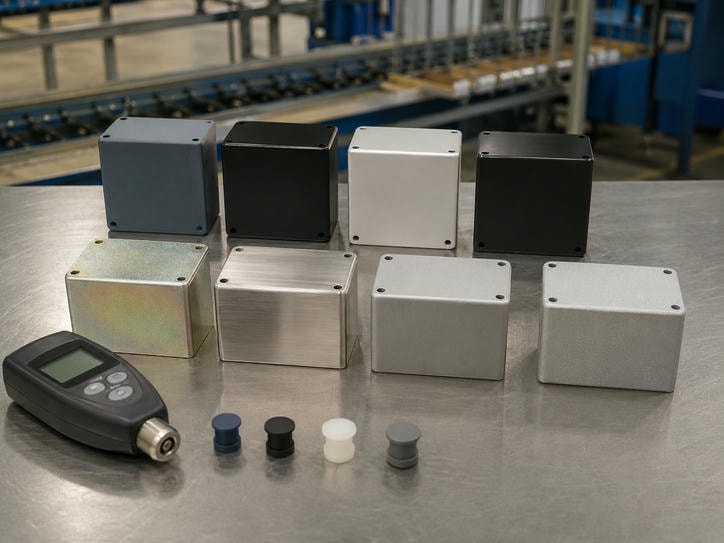
Guide to powder coat, anodize, plate, passivate, blast, electropolish, screen print, and laser mark—coordinated through qualified finishing partners.
View details →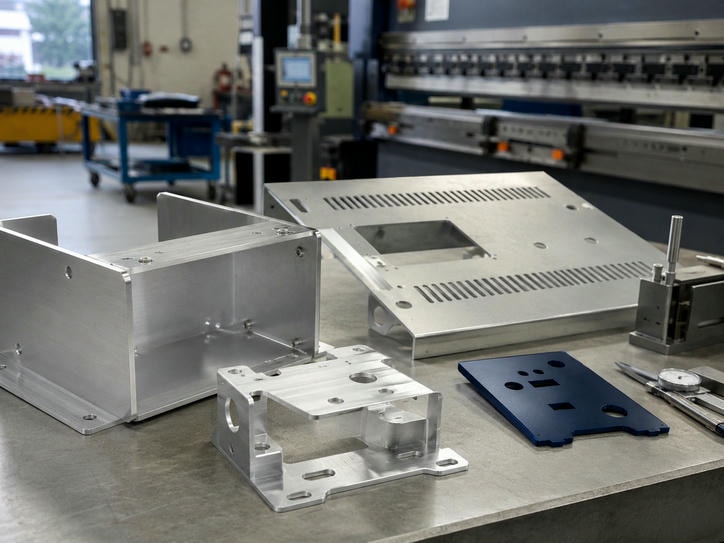
Aluminum sheet metal in 5052, 6061, and 5754. Laser cutting, CNC bending, welding, hardware, assembly, and partner anodizing. Prototypes in about 3–12 days.
View details →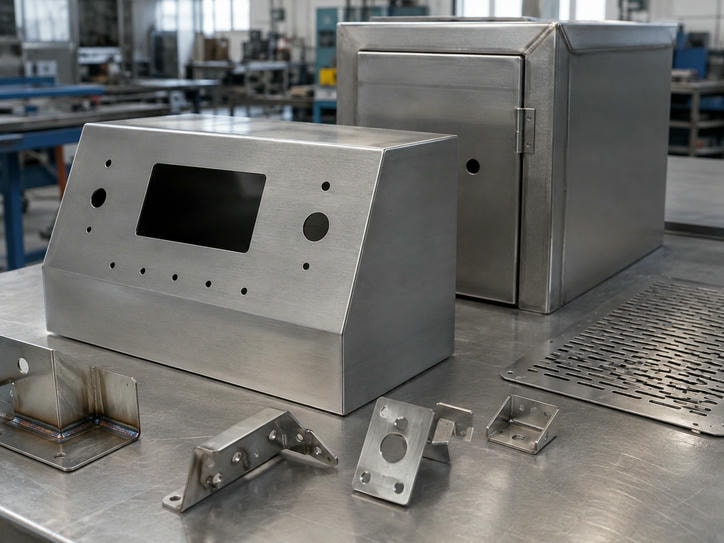
Stainless sheet metal fabrication in SUS304, SUS316, and SUS430 for industrial OEMs. Laser, bend, weld, hardware, and partner passivation or coating.
View details →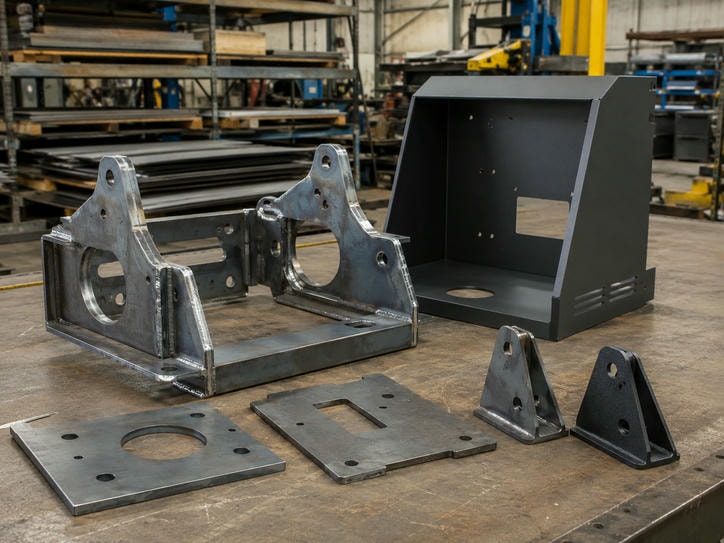
SPCC/CRS and Q235/Q355 sheet metal for frames, panels, and enclosures. Cost-effective strength with powder-coat readiness via finishing partners.
View details →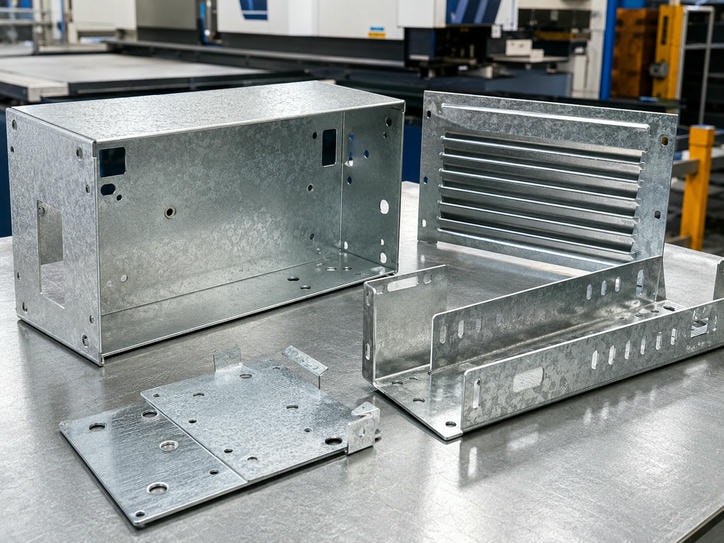
SGCC and SECC galvanized sheet for corrosion-resistant panels and enclosures. Forming notes and OEM fabrication support from prototype to production.
View details →