Rapidsheetfab
Menu
Request a Quote
en
Englishen中文(繁体)zh-TW
Industries

Sheet Metal Parts for Industrial Equipment OEMs

We support procurement and engineering teams with drawing-based enclosures, chassis, panels, frames, brackets, cabinets, and welded assemblies—from one-piece prototypes through repeat production. Each industry below shares our laser–bend–hardware–weld chain, but fit, cosmetic, and documentation needs differ.

How we work with OEM programs

Buyers and engineers typically come to us when a single assembly needs laser + bend + hardware + weld, when a prototype shop cannot support repeat builds, or when RFQ responses need clearer process and tolerance language. We review drawings for flat-pattern risk, bend interference, fastener clearance, and finish sequencing before committing lead time.

Our Dongguan team (3,500 m²; 5 fiber lasers; 7 brakes to 230T) works in English with overseas OEMs. Export communication and packaging practice have been part of our workflow since 2019. We do not claim industry-specific regulatory certifications beyond our ISO 9001:2015 quality system—when your PO needs FAI, CoC, material certs, or coating reports, we scope those documents against the drawing.

Useful RFQ package

  • PDF / DXF / STEP (or SolidWorks) with revision
  • Material grade & thickness, quantity by phase (proto / NPI / production)
  • Finish, marking, cosmetic zones, and critical dimensions
  • Target delivery and any FAI / CoC requirements
  • Industry-specific notes: IP sealing faces, grounding, cable cutouts, motion clearances

What differs by industry application

The child pages below cover each market in more detail. Here is how we typically differentiate requirements when quoting—so your RFQ is not treated as a generic “metal box” job.

Industrial automation

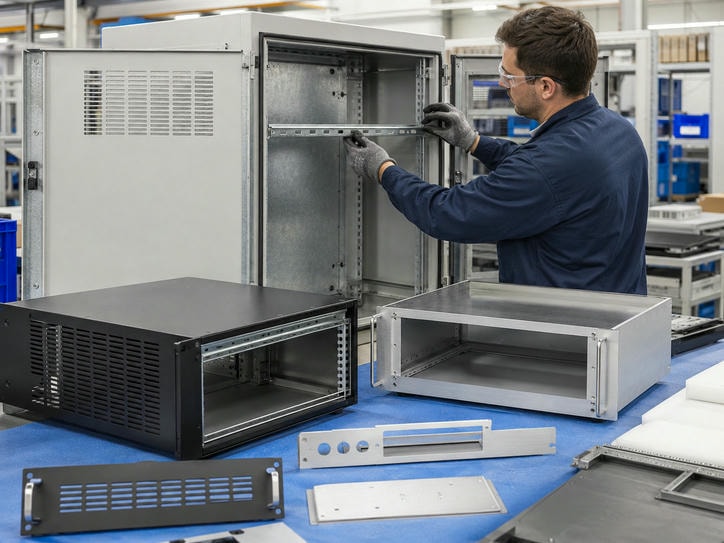
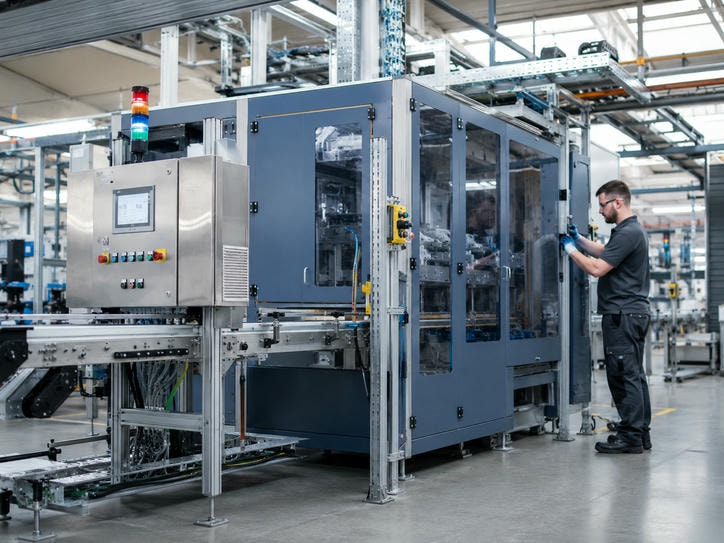
Machine enclosures, control cabinets, frames, guards, and mounting brackets. Buyers often need door alignment, hinge and latch fit, window cutouts, cable gland patterns, and powder-coat durability for plant floors. We review weld distortion on large panels, PEM patterns for DIN-rail or PLC mounting, and guard bend radii that stay safe without sharp edges. Repeat production benefits from stable bend sequences once the first article is approved.

Electronics & electrical

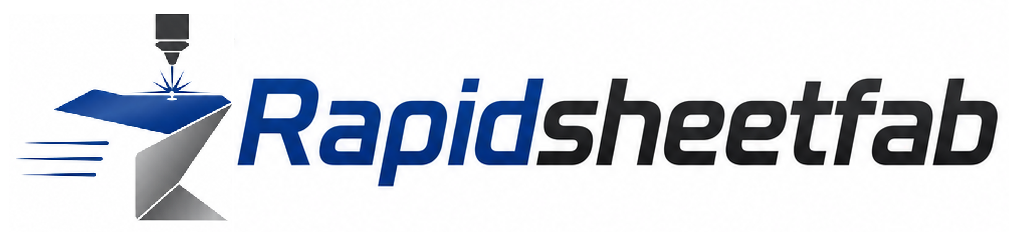
Chassis, mounting panels, housings, and cabinets with dense cutouts, PEM standoffs, and grounding features. Critical items on the RFQ: connector keep-outs, PCB standoff heights, paint-free grounding pads, and EMI-related seam notes when you specify them. We coordinate partner finishes (powder, plate, passivate) after in-house prep so hardware and masking stay consistent with your BOM.

Energy & EV equipment

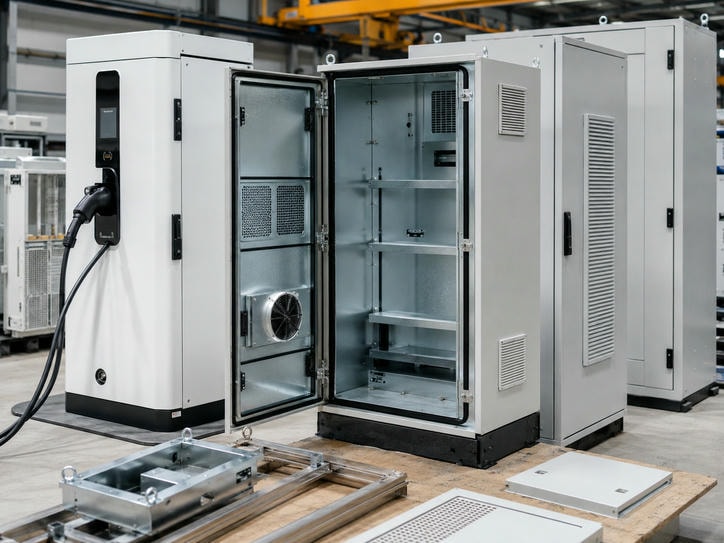
Battery, power conversion, and equipment enclosures where thickness, structural stiffness, and corrosion-aware finishes matter. Typical asks include thicker mild or stainless panels, reinforced frames, grounding bosses, and durable powder systems. Share weight targets, lifting-point locations, and any sealing or gasket lands so bend and weld plans match the duty cycle you expect in the field.

Robotics & smart equipment

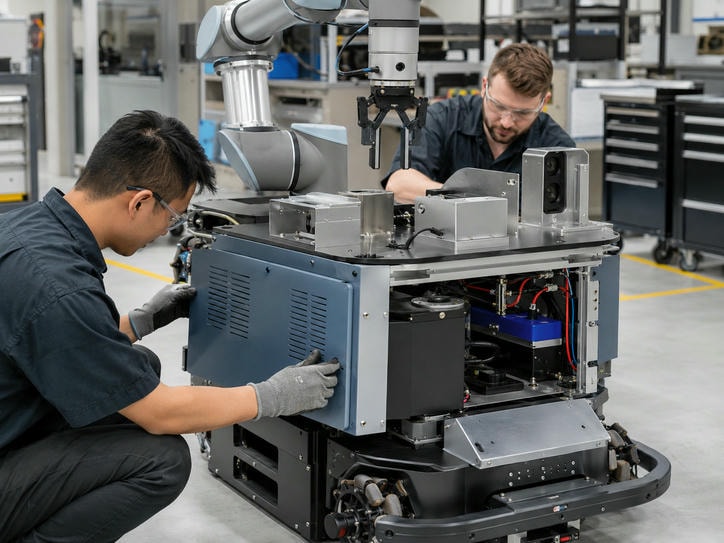
Covers, bases, panels, and welded assemblies for motion systems. Fit and access dominate: service openings, cable routes, sensor windows, and repeatable hole patterns for modules that swap between builds. Prototype-to-NPI continuity matters—our MOQ of one lets you check clearances before locking production tooling assumptions.

Telecom & data infrastructure

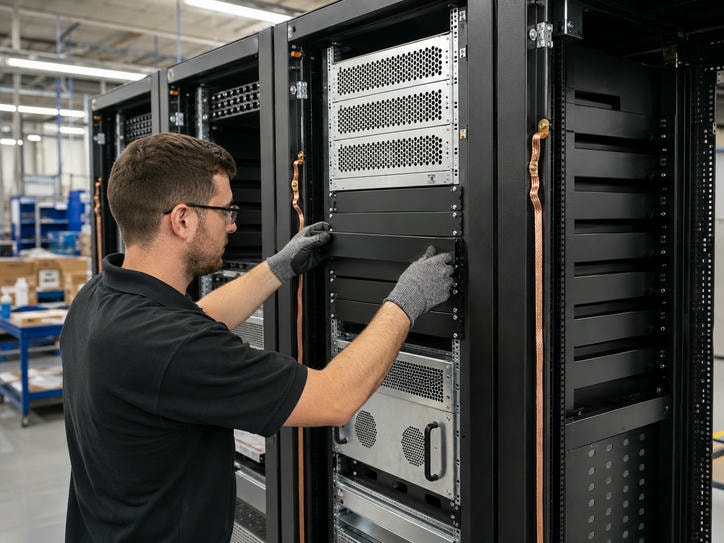
Rack components, network cabinets, and outdoor-oriented housings with cable openings, mounting patterns, and corrosion-aware material or finish choices. We pay attention to panel flatness for gasket compression, ventilation louvers (punch or laser), and consistent powder or galvanized strategies when you specify them. Outdoor or coastal duty should be called out so partner finish systems are scoped correctly.

Instrumentation

Precision housings, front panels, and small assemblies where cutout accuracy and cosmetic control support instrument packaging. Typical needs: clean brushed or partner-finished faces, accurate display and connector openings, and light-gauge forming without oil-canning. Mark cosmetic zones and critical apertures on the drawing; we will confirm laser and bend capability against those faces during DFM.
Shared process stack across industries

Regardless of end market, we fabricate with the same core equipment: fiber laser cutting to 2000 × 4000 mm, CNC punching, press brakes to 230T / 3000 mm, TIG/MIG/laser/spot welding, PEM and tapping, assembly, and in-house surface prep. Typical drawing-dependent tolerances: laser ±0.10 mm, bend ±0.20–0.30 mm, holes ±0.10–0.20 mm. Materials commonly include SUS304/316/430, SPCC/CRS and Q235/Q355, SGCC/SECC, and aluminum 5052/6061/5754 in the 0.5–12 mm sheet range.

From prototype to repeat builds

We support MOQ one for fit checks, then NPI and recurring production without forcing a supplier change mid-program. Typical lead times: prototypes 3–12 working days; small batches 10–15 days; regular production 15–25 days—always confirmed against finish queue and documentation scope. Email your package (no phone RFQ path); we respond with process notes, capability confirmation, and clear quality-document options.

DFM notes we often raise on industry RFQs

Before nesting, our engineers commonly ask for clarification on door/panel gap targets, hinge and latch stack-ups, gasket compression faces, grounding pad locations, cable entry coordinates, and which surfaces must stay paint-free. If your equipment ships internationally, tell us whether export cartons, corner protection, or desiccant are required so packaging is quoted with the parts—not as a last-minute add-on. When multiple part numbers share a family (left/right covers, size variants), send the full set so we can nest efficiently and keep bend tooling consistent across the program.